The Maryland Solar Access Program (MSAP) is a state grant, administered by the Maryland Energy Administration (MEA), that pays income-qualified Maryland homeowners $750 per kilowatt (kWDC) of installed solar capacity, up to a maximum of $7,500, toward a new residential solar panel system. The current funding round is Fiscal Year 2027 (FY27), which opened July 29, 2026 and accepts applications through May 31, 2027, at 3:00 p.m. ET — or until the $10 million budget runs out, whichever comes first. To qualify, you must own your home, meet MEA’s household income limits, and install your system through an MEA-approved MSAP Participating Contractor.
Table of Contents
- What Is the Maryland Solar Access Program?
- How Much Is the MSAP Grant Worth?
- FY27 Household Income Limits (Full Table)
- Full Eligibility Requirements
- How to Apply: The Two-Step Process
- Key 2026–2027 Deadlines
- Does MSAP Stack With Other Incentives?
- What Happened to the Federal Solar Tax Credit?
- Choosing an MSAP-Approved Contractor
- Frequently Asked Questions
1. What Is the Maryland Solar Access Program?
The Maryland Solar Access Program (MSAP) is a state-funded rebate created under Maryland’s Brighter Tomorrow Act of 2024 to help low- and moderate-income households go solar. It’s run by the Maryland Energy Administration (MEA) and funded through the state’s Strategic Energy Investment Fund (SEIF). Unlike a tax credit, MSAP is a direct cash grant. It’s designed to close the affordability gap for homeowners who want to install solar but don’t have — or can’t fully use — a large federal tax liability to offset with a tax credit. That distinction matters more in 2026 than it used to, since the federal government eliminated the residential solar tax credit for purchased systems (more on that below).
MSAP is specifically an income-qualified program. It is not open to every Maryland homeowner — eligibility is capped at 150% of the area’s state median income, adjusted for household size (see the table below).
2. How Much Is the MSAP Grant Worth?
The FY27 rebate is calculated as: $750 per kWDC of installed system capacity, up to a maximum rebate of $7,500 per household.
In practice, that means:
| System Size (kWDC) | MSAP Rebate |
|---|---|
| 4 kW | $3,000 |
| 6 kW | $4,500 |
| 8 kW | $6,000 |
| 10 kW or larger | $7,500 (maximum) |
MSAP rebate by system size, FY27.
A few important mechanics:
- The rebate is based on your system’s nameplate DC capacity, not the number of panels or your electricity usage.
- If your installed system ends up smaller than what you reserved funding for, MEA recalculates your rebate downward to match the as-built system.
- If it’s larger than reserved, your rebate is capped at the amount you originally reserved — it doesn’t increase.
- There is currently no additional MSAP adder for battery storage; the $750/kWDC rate applies to the solar array itself.
3. FY27 Household Income Limits (Full Table)
To qualify for MSAP, your total household income must fall at or below these FY27 limits, based on household size:
| Household Size | Maximum Annual Household Income |
|---|---|
| 1 person | $136,785 |
| 2 people | $156,375 |
| 3 people | $175,875 |
| 4 people | $195,375 |
| 5 people | $211,035 |
| 6 people | $226,695 |
| 7 people | $242,340 |
| 8 people | $257,910 |
Maryland Solar Access Program income limits by household size, FY27.
These figures represent roughly 150% of Maryland’s state median income and are adjusted upward each fiscal year, so they’re higher than the FY25 and FY26 limits. MEA provides a separate income-calculation guidance document to help applicants determine which sources of income count toward the household total — homeowners with irregular or multiple income sources should review that guidance or work with their contractor before applying.
4. Full Eligibility Requirements
Beyond income, MSAP has several other requirements that trip up applicants:
Homeownership and location
- The property must be owned by the income-eligible household.
- The property must be located in Maryland.
System requirements
- The system must be permanently affixed to a structure — quick-disconnect, portable, or trailer/RV/boat-mounted systems don’t qualify.
- The system must be certified (or have a pending certification application) under Maryland’s SREC Program.
- The system must not be eligible for the DC SREC Program — MEA requires applicants to confirm this using its GIS verification tool.
No duplicate incentives
- You can’t use MSAP to replace or expand a system that previously received funding from the Maryland Clean Energy Grant, MEA Clean Energy Rebate, MEA Residential Energy Equity Program, or an earlier (FY25/FY26) round of MSAP.
- Generally, a homeowner may not benefit from more than one MEA solar incentive on the same property.
Contractor and workforce rules
- Installation must be performed by a contractor on MEA’s current MSAP Participating Contractor List at the time you submit your reservation request.
- Contractors must certify that at least 80% of the project workforce lives in Maryland or within 50 miles of the state’s border, per SEIF requirements.
Ownership structure
You can qualify whether you’re buying the system outright, financing it with a loan, or entering a solar lease or power purchase agreement (PPA) — as long as the agreement clearly states who owns the system and, for purchases, the system is paid in full before the rebate is disbursed.
5. How to Apply: The Two-Step Process
MSAP uses a two-step application through MEA’s My MEA online portal.
Step 1 — Upfront Rebate Reservation (before installation)
You (or your contractor, on your behalf) submit a reservation request that includes:
- Signed program attestations
- A completed IRS Form W-9 for whoever will receive the rebate
- Proof of homeownership (deed, tax bill, or an assessments search printout)
- A fully executed solar agreement dated within 90 days of your application (and dated after April 17, 2026, for FY27)
- A signed MSAP Authorizations & Disclosures form
- A completed Maximum Offer Calculator, showing the deal meets MEA’s minimum consumer-savings requirement
- Confirmation the system is ineligible for DC SRECs
Once approved, your reservation is valid for 180 calendar days. If a delay outside your control threatens that window, you can request an extension — but you must ask at least 30 days before the reservation expires.
Step 2 — Rebate Payment Request (after installation)
After your system is installed and has received Permission to Operate (PTO) from your utility, you submit a second request with:
- Signed attestations and the payment request form
- Your utility’s PTO documentation
- Proof that your financial obligations for the system have been met (paid invoice or financing agreement)
- SREC certification (or pending application) documentation
You can choose to receive the rebate directly, have your contractor apply on your behalf and pass it to you, or have your contractor take the rebate and reflect it as a lower price on your contract. Electronic payment (ACH) is strongly recommended to avoid delays, and recipients should note that MSAP rebates may generate a 1099-G — a tax professional can advise on how that affects your return.
6. Key 2026–2027 Deadlines
- Application window opened: July 29, 2026
- Application deadline: May 31, 2027, 3:00 p.m. ET (the portal can close earlier if the $10 million budget is fully reserved)
- Reservation validity: 180 days from approval, with extensions available for causes outside the applicant’s control
As of late August 2026, only a small fraction of the FY27 budget had been requested — but MSAP is a first-come, first-served program, and funding rounds in prior years have closed early once demand picked up. Homeowners considering solar shouldn’t wait until spring to start the process.
7. Does MSAP Stack With Other Incentives?
Partially. Here’s how it fits with the rest of the Maryland solar incentive landscape:
- Maryland net metering: Still available statewide and separate from MSAP — homeowners can use both. Net metering lets you bank excess solar production as a credit against future utility bills.
- Maryland SRECs: MSAP actually requires your system to be SREC-certified (or pending certification), so this isn’t a conflict — it’s a program requirement. You can still sell your SRECs on the open market after your system is online.
- Other MEA grants: MSAP cannot be combined with the Maryland Clean Energy Grant, the MEA Clean Energy Rebate, or the MEA Residential Energy Equity Program on the same property. A homeowner generally may not receive more than one MEA solar incentive per residence.
- Federal solar incentives: See the section below — this is the piece that’s changed the most heading into 2026.
8. What Happened to the Federal Solar Tax Credit?
This is the single biggest change Maryland homeowners need to understand before assuming their old math still applies.
The federal Residential Clean Energy Credit (Section 25D) — the 30% credit that applied to purchased or loan-financed solar systems — was eliminated for any system placed in service after December 31, 2025 under the One Big Beautiful Bill Act. Simply signing a contract or paying a deposit before that date didn’t preserve eligibility; the system had to be fully installed.
Practically, that means:
- If you buy or finance your system outright in 2026 or later, there is no federal tax credit available to you. MSAP’s $750/kWDC state grant is now doing more of the financial heavy lifting than it was designed to do a year ago.
- Leased systems and PPAs can still generate a federal credit under a different section (48E) — but that credit belongs to the company that owns the panels, not the homeowner. Some installers pass part of that value through in the form of a lower lease or PPA rate, but it isn’t a credit you claim on your own return.
Given that shift, MSAP’s up-to-$7,500 grant is one of the few remaining direct-to-homeowner financial incentives for going solar in Maryland — which is also why income-qualified households shouldn’t assume solar is now out of reach; if anything, the math has moved toward programs like MSAP mattering more.
(MEA does not provide tax advice, and neither do we — talk to a qualified tax professional about how any of this applies to your specific situation.)
9. Choosing an MSAP-Approved Contractor
Because MSAP requires you to work with a contractor on MEA’s current Participating Contractor List before you submit your reservation request, this is the step to nail down first — not last. A few things worth checking before you sign anything:
- Confirm the contractor’s name appears on the live MSAP Participating Contractor List on MEA’s website (this list is updated on a rolling basis).
- Ask to see the completed Maximum Offer Calculator for your proposed system — MEA requires this to demonstrate the deal meets minimum guaranteed savings compared to what you’d otherwise pay your utility.
- Get the contract date right: for FY27, your solar agreement needs to be dated after April 17, 2026, and no more than 90 days before your reservation application.
- Ask directly how they plan to structure the rebate — will you receive it, or will it show up as a reduced price on your contract?
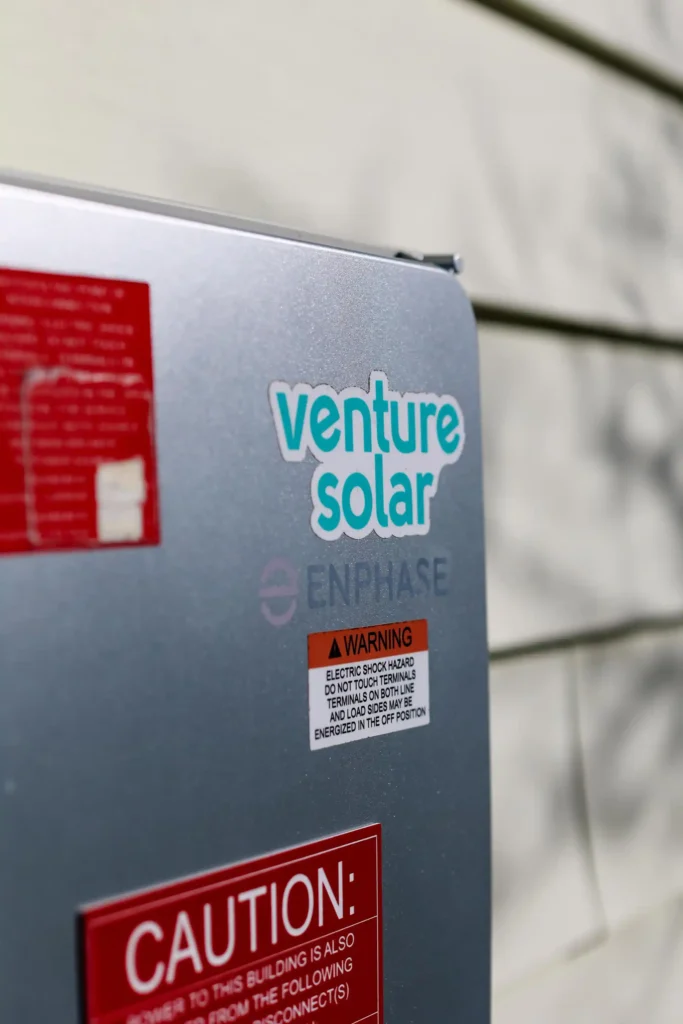
At Venture Home, we help homeowners cut through exactly this kind of program complexity — mapping out which state and utility incentives actually apply to your address, what a program like MSAP is worth for your specific system size, and what your real numbers look like once every rebate, credit, and utility bill offset is accounted for. If you’re a Maryland homeowner trying to figure out whether MSAP makes solar pencil out for your household, talk to a Venture Home energy advisor for a no-pressure walkthrough of your options.
Frequently Asked Questions about Maryland Solar Access Program
Is the Maryland Solar Access Program the same as the “2026 Maryland solar grant”?
Yes. MEA’s fiscal years run July through June, so the round most homeowners find when searching for a “2026” grant is officially FY27, which opened July 29, 2026, and runs through May 31, 2027.
How much money can I get from MSAP?
$750 per kWDC of installed solar capacity, up to a maximum of $7,500 per household, based on your system’s nameplate size.
What is the household income limit for MSAP in 2026–2027?
It ranges from $136,785 for a one-person household up to $257,910 for an eight-person household, based on FY27 limits published by MEA.
Do I have to own my home to qualify?
Yes. The property must be owned by the income-eligible household, and it must be located in Maryland.
Can renters or landlords apply?
No. MSAP is limited to homeowners installing solar on a property they own and occupy as the income-eligible household.
Does MSAP cover battery storage?
The $750/kWDC rebate applies to the solar array’s capacity; the program materials don’t include a separate adder specifically for battery storage.
Can I still get the federal solar tax credit in 2026?
Not for a purchased or financed system — the 25D federal residential credit ended for systems placed in service after December 31, 2025. Leased systems and PPAs may still generate a credit, but it belongs to the system’s owner (the leasing company), not the homeowner.
What happens if I miss the May 31, 2027 deadline?
Applications are accepted until that date and time, or until the $10 million FY27 budget is fully reserved — whichever happens first. Because it’s first-come, first-served, applying earlier in the cycle improves your odds of funding being available.
Can I use any solar installer, or does it have to be a specific company?
It must be a contractor currently listed on MEA’s MSAP Participating Contractor List at the time you submit your Step 1 reservation request. Using a non-listed contractor disqualifies the application.
How long does my rebate reservation last once approved?
180 calendar days from approval. Extensions are available for delays outside your control, but you must request one at least 30 days before the reservation expires.
Primary source for all figures in this article: Maryland Energy Administration, FY27 Maryland Solar Access Program Funding Opportunity Announcement (issued July 29, 2026), and the official MSAP program page. Federal tax credit information reflects changes under the One Big Beautiful Bill Act (H.R. 1, 2025). Program rules and funding availability can change — always confirm current details on MEA’s website before applying.